Dec 10, 2025
 3 min read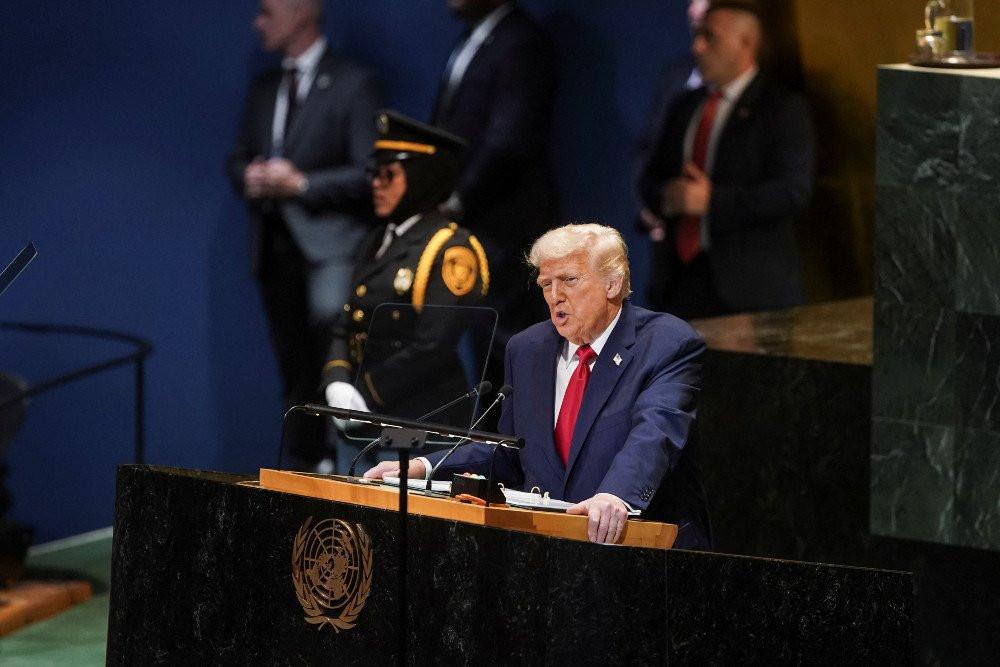
US President Donald Trump has asserted US dominance in the Western Hemisphere and the Indo-Pacific region.
Bisnis.com, JAKARTA - Presiden AS Donald Trump menegaskan ambisi mengembalikan dominasi Amerika di Belahan Barat (Western Hemisphere), memperkuat militer di Indo-Pasifik, dan meninjau ulang hubungan dengan kawasan Eropa.
The statement is contained in the latest National Security Strategy document released over the weekend, which seeks to reshape the United States' role on the world stage.
On Monday (8/12/2025), Reuters began describing Trump's vision as flexible acting, reviving 19th-century Monsieur ideology.
This document clearly affirms Trump's efforts to shake up the world's largest post-World War II agendas through the perspective of an "America First" policy, while redefining the names of those post-World War II alliances in the United States.
"President Trump's foreign policy is pragmatic without being pragmatic, realistic without being extremist, principled without being idealistic, firm without being hawkish, and restrained without shame. This policy is primarily guided by what is in America's best interest," the 29-page document read.
This strategy is the main directive issued by any new government and is a reference point for many state institutions.The strategy states that Trump will restore American sovereignty in the Western Hemisphere and make the region the center of his administration's foreign policy.
"Trump's adoption of the Monroe Doctrine is a reasonable revival of America's strengths and priorities and is consistent with the national security interests of the United States," the document said.
Since taking office in January, many critics have said Trump's rhetoric is often similar to that of contemporary imperialists in America.Early in his administration, Trump was dissatisfied with the possibility of expanding the Panama and Canadian canals.
Recently, an increase in the U.S. military presence in the Caribbean region, accompanied by threats of ground attacks in Venezuela and other countries that serve as bases for drug cartels, has increased public concern. These concerns come amid a long history of U.S. military intervention in the region.
Currently, the United States is reported to be sending more than 10,000 military personnel to the Caribbean, complete with warships and fighter planes.
"This new national security system clearly shows that we are going back to the old patterns," said the Washington-based think tank.
The document also touches on China's growing economic influence in Latin America, a concern of successive US administrations, as well as Washington's determination to curb Beijing's expansion.
In Asia, Trump has stated that his goal is to prevent conflict with China over Taiwan and the South China Sea by strengthening the military power of the United States and its allies.
"Avoiding conflict in Taiwan, ideally by maintaining military dominance, is a top priority," the document said.
The issue of Taiwan itself has been a source of tension in US-China relations.But Trump's signature of often unorthodox foreign policy moves means that the direction of the precise implementation of this strategy remains difficult to predict.
In the document, the Trump administration also has a dark view of Europe, in the region facing policy risks "and wants to be a reliable ally for the United States."
The statement was part of a series of recent statements by US officials that have challenged post-war assumptions about closer ties between Europe and its main ally, the United States.
"In the long term, after a few years, that's exactly how it is, most of the NATO members will be countries with many people," the book says.
A number of European analysts analyze that the list in these programs is based on the specific parties in Europe, which together with us now have the greatest opposition to Germany, France and other cultures.
According to the document, the Trump administration wants to restore Western identity in Europe.The statement comes as Trump's criticism of the White House's anti-immigration agency comes as a surprise.
Although some European politicians have expressed social support, especially when they want to rebuild the Russian military, they are on the support of the American military.
The document also states that US strategic interests include a rapid resolution of the Ukrainian conflict and restoration of strategic stability with Russia.
Trump himself has come under fire for his repeated praise of Russian President Vladimir Putin, which has led to accusations of being too soft on Moscow.
Reuters reports that the U.S. governmentwants Europe to take on NATO's conventional defense capabilities, from intelligence to missile systems, at a time when some European officials say it is unrealistic.
To check before Trump's world sites on Trump, consider the tank of analysis of Brad Bowman wrote
Meanwhile, the European region is considered the disadvantaged."The Middle East remains a big question mark, while Africa, good luck," he wrote.